University of Mataram Brings Local Arts to Public Audiences Through Student Performances, Cultural Festivals, and Traditional Theatre
The University of Mataram (Unram) continues to contribute to local arts and cultural heritage by presenting performances in public venues and supporting artistic collaboration between students and community cultural groups. Through the Arts and Culture Student Activity Unit (UKM Seni dan Budaya), academic programmes, and village community-service activities, the university creates opportunities for traditional dance, contemporary music, theatre, and local storytelling to be shared with audiences beyond conventional classrooms. These activities support Sustainable Development Goal (SDG) 11, particularly Indicator 11.2.5, which recognizes universities’ contributions to local arts through public performances by university-affiliated cultural and performing arts groups.
Between January 2025 and June 2026, documented initiatives included a community cultural festival in Sembalun Bumbung, student performances at Unram Impact Expo in Mataram, a performing-arts workshop involving the Rudat tradition, and a public student arts showcase at the university’s Arena Budaya. The strongest evidence of public-facing performance is associated with events where artistic acts were presented to audiences that included local residents, school communities, or members of the general public. Other activities, including workshops and invitation-based ceremonies, are useful evidence of cultural development but should be differentiated from unrestricted public performances when reporting annual totals.

Student Arts and Culture Unit Performs for the Public at Unram Impact Expo 2025
On 29 November 2025, Unram organized Unram Impact Expo at Lombok Epicentrum Mall, a venue that connects university activities with visitors and the wider community of West Nusa Tenggara. According to the official University of Mataram publication issued on 30 November 2025, the event featured a programme of performances by UKM Seni dan Budaya alongside academic exhibitions, innovation displays, and public discussions. The arts programme included percussion, traditional dance, band performances, and solo singing, providing a direct example of student musicians and performers sharing their work with a public audience.
The expo was not confined to a closed university audience, as the university explicitly described it as an activity intended to involve people from across West Nusa Tenggara. By presenting the arts alongside research and innovation, Unram showed that cultural expression can become part of public engagement rather than remain an extracurricular activity observed only by students. The variety of performing arts also created opportunities for both local heritage and contemporary musical practices to appear within a single university-organized event.
Traditional Dance Highlights the Cultural Closing of a Public University Expo
The closing night of Unram Impact Expo took place on the evening of 29 November 2025, also at Lombok Epicentrum Mall. As reported in the university’s closing-night news published on 1 December 2025, the event opened with artistic entertainment that included the Dedare Gogorancah traditional dance. The performance was presented to expo visitors before the programme moved to its public discussion on cooperation and regional innovation.
This performance demonstrates how a university-organized public event can make local dance visible to people who may not otherwise attend a dedicated cultural festival. The combination of traditional arts and a public programme on social and economic development enabled cultural heritage to form part of a broader dialogue between university and society. For annual reporting, the closing-night dance should be documented as a performance within the same 29 November expo programme rather than automatically counted as an additional independent event.

Community Cultural Festival in Sembalun Bumbung Sustains Local Performance Traditions
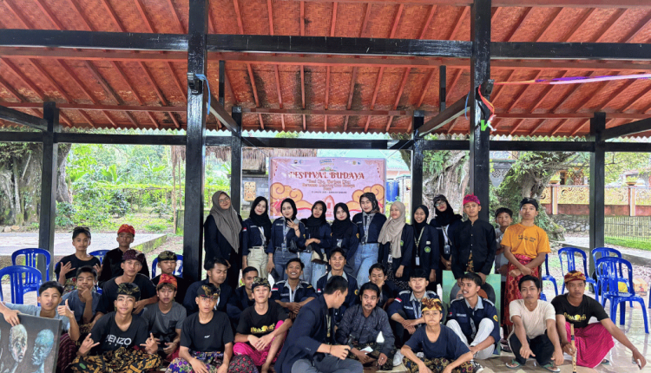
In January 2025, students participating in Unram’s Community Empowerment Village Service Programme (KKN PMD) worked with students from UIN Malang to organize a cultural festival in Sembalun Bumbung Village, East Lombok. The event, described in a Rakyat Merdeka report published on 29 January 2025, carried the theme “Our Arts, Our Heritage: Preserving Village Culture Together” and was held at the Pendopo Bale Adat. It brought together around 50 primary-school children with teachers, village leadership, customary figures, local young people, and student organizers.
The programme featured the Tandang Mendet dance, a Gendang Beleq musical performance, and dance-related competitions alongside cultural education activities. By involving residents and traditional community representatives, the event created an audience for local arts in a village setting and connected younger generations with forms of performance associated with Lombok. Its principal audience was a school and village community rather than unrestricted visitors from the wider region, a distinction that should be retained when presenting this event as evidence of community-facing arts engagement.

Revitalizing Rudat, Kemidi Rudat, and Hikayat Poetry through Student Participation
Unram’s Faculty of Teacher Training and Education (FKIP) also strengthened the continuity of traditional performing arts through a community engagement programme involving Sanggar Setia Budi in Terengan, North Lombok. A peer-reviewed community-service publication released on 26 November 2025 documented a workshop in which 85 students from the Indonesian Language and Literature Education programme participated in learning and performances connected to Rudat, Kemidi Rudat, and traditional Hikayat poetry. The programme combined cultural explanation, practical rehearsal, and a final performance under the guidance of local artists.
The collaboration helped participating students experience regional performing arts as embodied cultural practices rather than merely as literary subjects. The published study reported an increase in students’ interest in traditional performance literature and described documentation through photographs, videos, and digital media to extend the visibility of the traditions. Because the article primarily identifies workshop participants and local artistic partners, the performance should be treated as supportive evidence of arts preservation unless separate attendance records establish that it was openly accessible to the general public.
Free Public Performance at Arena Budaya Showcases Contemporary Puppetry and Poetry Theatre
On 23 June 2026, students from the Indonesian Language and Literature Education programme at FKIP Unram organized the Pagelaran Karya Inspiratif at the university’s Arena Budaya. The event report published by Pena Kampus on 24 June 2026 explicitly stated that the showcase was open to the public free of charge, providing strong evidence of community access to student performing arts. The programme featured puppet performances, theatrical poetry, and a display of student-produced magazines, combining live performance with creative literary work.
The activity brought together outcomes from courses in Performing Literature, Introduction to Education, and Journalism, enabling students to translate their coursework into a public cultural programme. The combination of contemporary puppetry and poetry theatre is especially relevant to preserving the vitality of traditional literary and dramatic forms while allowing students to reinterpret them for current audiences. Its free public admission and clearly identified venue make the 23 June event one of the most directly applicable examples for SDG Indicator 11.2.5 within the first half of 2026.

Campus Ceremonies Offer Additional Platforms for Student Artistry
The university’s student arts groups also performed in institutional ceremonies, demonstrating sustained opportunities for artistic participation throughout the reporting period. At Unram’s 24-25 June 2026 graduation ceremonies, for example, the official university publication dated 25 June 2026 recorded special entertainment provided by members of UKM Seni dan Budaya following the formal graduation agenda. The occasion gave student performers the opportunity to present their work before graduates and invited guests.
Such performances help sustain the activities of student arts organizations and give their members experience presenting creative work to sizable audiences. Nevertheless, graduation ceremonies may operate under attendance restrictions and cannot automatically be classified as performances accessible to the general public. They are therefore best documented as evidence of university support for the performing arts, separate from events with independently confirmed public attendance.
Institutional Commitment and Evidence of Annual Public Performances
The university’s support for cultural heritage is consistent with Rector’s Decree No. 5157/UN18/HK/2026, issued on 6 April 2026, which establishes Unram’s institutional commitment to the Sustainable Development Goals. In its second operative provision, item 33 refers to the development of sustainable communities and the preservation of cultural heritage and the environment, while item 34 addresses public access to certain university resources and open spaces in accordance with applicable provisions. These commitments provide a policy context for student arts activities and for opening appropriate cultural venues to external audiences, although they do not establish an annual performance quota.
The documentary record identifies at least two distinct community-facing arts programmes in 2025: the January Sembalun Bumbung cultural festival and the 29 November Unram Impact Expo, with several artistic acts reported within the latter programme. For January-June 2026, the free Arena Budaya showcase on 23 June provides at least one documented public-access event, while the June graduation performances provide additional evidence of student artistic activity but not confirmed unrestricted public access. These figures represent verifiable event-level examples from the consulted sources, not a complete census of all university choir, theatre, orchestra, or student arts performances.
The university also maintains UKM Seni dan Budaya as an institutional student arts activity unit, offering a continuing platform for dance, music, and performance development. Although keroncong music has been associated with previous university artistic activities, a specific Unram keroncong orchestra performance dated between January 2025 and June 2026 could not be established from the reviewed sources and has therefore not been counted. More complete annual performance records, including programmes, dated photographs, venue details, performing groups, and audience access conditions, would help demonstrate the full scale of Unram’s contribution to local arts under SDG 11.2.5.
Advancing SDG 11 Through Arts, Heritage, and Community Engagement
The documented cultural programmes demonstrate how the University of Mataram contributes to the public appreciation of local arts through multiple channels. Student dance and music performances in a public shopping centre, village-based cultural festivals, traditional theatre collaborations, and a free arts showcase at Arena Budaya created opportunities for audiences to encounter cultural expressions connected to Lombok and the wider region. These activities show that university engagement with cultural heritage can take place both on campus and in community settings.
By supporting student performers and working with traditional cultural groups, Unram strengthens the relationship between education, intergenerational learning, and the visibility of local arts. The public events held in 2025 and the first half of 2026 provide concrete examples relevant to the annual public performance dimension of SDG Indicator 11.2.5, while workshops and invitation-based performances add context to the university’s artistic development role. Continued documentation of performances and audience accessibility will support more consistent public reporting and a stronger evidence base for the preservation and promotion of regional cultural heritage.